Pharmaceutical competitive intelligence (CI) has been a cornerstone of successful drug launches for decades. From multinational pharmaceutical companies, to emerging biotechs, and drug development investors alike, each key pharma player conducts extensive and ongoing CI to fund and/or develop novel, innovative therapeutics.
This guide will break down what competitive intelligence in pharma really is, the specific use cases for CI by stakeholder type, and how CI is changing in the face of a new technological era (AI) as well as a new global landscape in drug development (the explosion of Chinese R&D).
CI Definition: from Conceptual Genesis to Modern Theoretical Frameworks
Michael Porter's book, Competitive Strategy: Techniques for Analyzing Industries and Competitors, published in 1980, is widely regarded as the conceptual genesis of CI.[1] Porter defines CI as a method of profiling competitors' possible strategic maneuvers, their responses to possible strategic moves from other firms, and their responses to broader industry, environment, and regulatory changes that may occur.
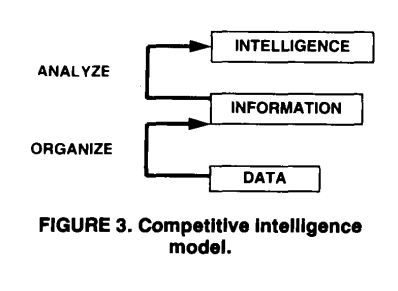
Building on Porter's early work, Krol et al. developed another definition in the 1990s using a more process-based lens. For them, CI is considered to be the aggregation of data on competitors, processing that data to generate information, and analyzing that information to produce intelligence:
Figure from Krol et al., 1996 [2].
For scientific CI in particular, Krol et al. view it as the process of monitoring competitor research and product development pipelines as well as scientific and technological trends occurring in the broader industry.[2]
Finally, a more recent definition of CI focused squarely on pharma surfaces in 2012 from Huml:
"defining, gathering, analyzing, and distributing intelligence, both non-proprietary and proprietary, on pharmaceutical products, customers, competitors, and any aspect of a particular functional area needed to support executives and managers in making strategic decisions for an organization."[3]
Huml's focus on strategic decision-making is an important outcomes-based lens for defining CI. Without the ability to inform drug development programs, regulatory engagement, investment decisions, and more, CI ceases to hold much practical business value.
From Theory to Practice in Pharma
Shifting from a theoretical foundation towards practical use, pharma CI today is centered around a well-established set of data types and data sources. While some of the definitions above roped in monitoring of macro industry trends and regulatory landscapes, our consideration of CI excludes those elements, since that information does not pertain to specific competing firms or assets. Undoubtedly, those are important aspects of the market landscape for drug developers to monitor, but are a distinct information-gathering and monitoring effort from competitor-focused CI.
With macro-trend analysis to the side, pharma CI data is largely derived from the following data types and sources:
Data TypesData Sources
Patent Filings
Patent Registries
Academic Publications
Academic Journals, Literature Indexes (e.g., PubMed)
Industry Conference Posters / Abstracts
Conference Repositories
Company Press Releases / Announcements
Newswires, Company Newsrooms
Financial & Corporate Documents
Company Investor Pages, Government Databases (e.g., SEC EDGAR)
Regulatory Interaction Records (e.g., FDA Committee Meetings)
Drug Regulatory Databases (FDA, EMA, etc.)
Clinical Trial Records
Clinical Trial Registries (e.g., CTrials.gov, WHO ICTRP)
While not exhaustive, above are the main data types and corresponding sources where the vast majority of non-proprietary, publicly available CI data is derived from.
One major gap from this list is pricing data. Data on wholesale acquisition costs, average sale prices, and other pharmaceutical pricing figures are available through paid sources such as Red Book, GlobalData, and more.[4][5]
Beyond list prices, other pricing data are much more difficult to access, even through paid platforms. Pricing rebates and contract details are extremely confidential and protected (with good reason) by pharmaceutical companies. While rough estimates can at times be teased out by speaking with representatives from the insurance and provider side of healthcare, such information is rarely accessible outside of the four walls of a given drug manufacturer.
End Goal with Using CI
While data inputs used are the same (outlined above), the objectives for conducting CI often vary from biotech, to pharma, to investors. The chart below outlines some of the most common use cases with CI data by key player:
Pharma BD
Deal Finding
Deal Evaluation
Pharma R&D
Pipeline Steering
Clinical Strategy
Regulatory Strategy
Emerging Biotech
Fundraising
Pipeline Steering
Clinical Strategy
Regulatory Strategy
Investors
Deal Finding
Deal Evaluation
Portfolio Monitoring
Portfolio Resource Development
Pharma BD
Business development (BD) teams at large pharma companies are constantly searching for acquisitions and partnership / licensing opportunities to continue fueling their portfolios with innovative therapeutics. Pharma companies need to not only grow their revenue year over year but also to replace future lost revenue that occurs when the patents on their cash-cow products expire.
Take Merck's 2025-2026 acquisition spree as a prime example of a pharma company attempting to displace the revenue from their mega blockbuster oncology drug Keytruda, which has a looming patent expiration in 2028.[6] Merck even split off a dedicated oncology division of the company to focus efforts on this major revenue transition effort.[7]
Pharma BD teams primarily use CI for deal finding and deal evaluation.
Deal Finding: to identify novel assets in early stages of preclinical development and early clinical stage assets with promising clinical trial data for potential acquisition, partnership, or licensing.
Deal Evaluation: further on in the deal pipeline, once an asset or company is being considered by the BD team, CI is further utilized to size the opportunity and risk of an investment or partnership. This includes comparing trial data of the asset in question versus competitors in the pipeline, determining revenue potential, and determining indication expansion opportunities.
Non-proprietary CI, however, is more heavily used for deal finding, as a large portion of deal evaluation takes place using data rooms set up between the pharma BD team and biotech in question to review proprietary data.
Pharma R&D
Pharma R&D encompasses not only early stage discovery / preclinical drug development teams but also clinical stage development as well as commercialization teams. Essentially, these are the folks helping innovate and develop a drug from start to finish. There are numerous use cases for CI in pharma R&D teams, which is why pharma CI teams support not only BD but also R&D:
Pipeline Steering: CI can help inform whether certain discovery or preclinical stage assets should be progressed or discontinued based on scientific signals of therapeutic relevance, efficacy, and/or safety. This information will largely be drawn from conference materials and academic journal publications. CI can not only steer which assets to proceed with, but also which indications to pursue, which may be just as critical as the molecule itself in generating successful clinical trial data and working towards a successfully approved therapy.
Clinical Strategy: Clinical trial design is highly consequential for therapeutic approval and also the magnitude of commercial success. By examining intelligence on how competitors have set up clinical trials, what their study protocols are, what strategic decisions have led to success versus failure, these can all help guide trial design and set the asset up for its greatest chance of commercial success.
Keytruda again provides a great example of how trial design helped bolster successful commercial outcomes. The clinical development and launch team focused FDA approval efforts on NSCLC patients with >50% PD-L1 expression in tumors, where the survival outcomes with the drug were significantly higher.[8] This decision along with other key trial design characteristics enabled accelerated approval as well as rapid indication expansion.
Regulatory Strategy: Regulatory engagement takes place throughout the entire drug life cycle; from investigational new drug (IND) submissions prior to initiating in-human trials, to the new drug application (NDA) (or biologics license application) to receive FDA approval and everything in between, regulatory engagement is at the heart of therapeutic development. CI data on historical and active competitor engagement with regulatory bodies, outcomes of FDA committee meetings, evidence package submissions and the FDA's reactions can all help inform regulatory engagement strategy and more importantly, evidence preparation strategy for successful regulatory outcomes.
While a lot of active discussions between drug developers and the FDA are kept proprietary between the two parties (not available for CI), a fair amount of the regulatory interaction outcomes and ingoing strategies are made publicly available.
The simplified drug development timeline below outlines each of the three key R&D phases where CI is used:
Drug Development Timeline
Pipeline Development
Clinical Development
Regulatory Engagement
Biotech
In this report, biotech refers to early stage and emerging therapeutic development companies, most often who have one or a few assets in their pipeline and are looking to bring their first therapy to market. These companies are the real innovative backbone of the pharma ecosystem and are often where large pharma sources their new innovative therapies through acquisitions.
While their need for CI is just as significant as Pharma R&D, emerging biotechs often have smaller teams and fewer resources for extensive CI operations. Technology may, however, help close part of this gap, and is one area that Inflection Labs is working to deliver greater equity of CI capabilities in the industry.
Biotech companies engage in the same drug development process as pharma R&D, and thus share the same use cases outlined above (pipeline steering, clinical strategy, and regulatory strategy).
However, biotech companies have an additional CI use case critical for their operations:
Fundraising: CI is used to generate an investment thesis by outlining the revenue potential, competitive landscape, and comparative value proposition of a biotech's pipeline. This thesis is necessary to pitch investors and ultimately raise capital to fund drug development. It's also crucial context when entering licensing and partnerships discussions with pharma.
Biotech Investors
Due to the risky nature and high failure rate of early-stage drug development, much of the funding at this stage is sourced from venture capital (VC) firms that are comfortable with taking on high risk investments. Private equity (PE) is also a notable player but often enters the picture later on, once biotech companies are more mature and the potential for a return is more derisked. Many biotech companies also IPO relatively early on in clinical development to source public markets funding for expensive clinical trials. And lastly, much of the mid to later stage biotech 'funding' often comes from pharma companies themselves who look to partner or acquire promising assets.
Regardless of investor type, as we saw with pharma BD teams, deal finding and evaluation are core processes for investors. CI is one of, if not the key input powering these processes.
After deals are closed, CI helps investors monitor and update the investment thesis for each of their portfolio companies. Some firms also look to develop CI resources for their portfolio biotech companies. RA Capital and Curie.bio are great examples of a VC and a VC / accelerator hybrid that are focused on building out resource infrastructure for portfolio companies.[9][10]
The Right Approach for Conducting CI
CI execution varies widely across pharma stakeholders. The different methods of conducting CI can be plotted along a spectrum of increasing rigor and resource allocation:
Increasing Complexity / Capability
No CI / Web SearchingDIY Web Scraper / AI AgentsEnterprise CI DashboardsFull Time HireExpansive Team / Dedicated Division
Pharma
Investors
Biotech
No CI: While it is understandable that some emerging biotech companies focus solely on R&D and do not conduct any CI, this poses a threat for justifying commercial viability and fundraising to progress drug development. For any CI research that does take place, it's often surface-level, manual web searching to generate a competitive landscape that will hopefully hold during investor pitches.
DIY Web Scraper / AI Agents: With consumer-grade AI products (ChatGPT, Claude, etc.), many biotech executives have set up their own AI agents or systems to web scrape competitive data. A notable issue with this method however is that ultimately a lot of time is spent reviewing and quality-checking the data to achieve accuracy. While the ultimate goal with AI agents for CI is to save time, this is rarely the case and can often mislead executives / R&D teams.
Enterprise Dashboards: Products such as Cortellis, AlphaSense, Synapse, and more, all provide a vast array of processed CI data. While these dashboards are quite useful and leveraged by biotech, pharma, and investors alike, there are two key limitations: (1) these dashboards have very expensive license fees and (2) there is significant time burden associated with combing through dashboard data to extract relevant CI (what we call 'dashboard sleuthing'). Dashboard sleuthing is too high of a time cost for biotech C-suite executives wearing many hats and agile VC teams that need to act on deals quickly.
Full Time Hire / CI Team: For later stage biotechs and pharma companies, having dedicated hires to conduct CI is the gold standard. While the cost is quite high, the expertise at their disposal leads to highly effective CI outputs and strategic decision-making.
Smaller biotechs, while aware of the value of having a CI team, are often constrained on resources, and are looking for more innovative solutions to bring a similar caliber of CI in through their doors that pharma benefits from. Services like Inflection Labs that combine industry expertise with AI-driven data preparation tools offer the speed and cost advantages of AI technology without sacrificing the value of expert knowledge.
Pharma and VC can also benefit. CI teams are shrunken down and become more tech-enabled, integrating AI to handle early stages of the CI process, while industry experts continue to own analysis and decision-making.
Target Disease Dictates Your CI Hygiene
The level of need for CI updates is not the same across all of drug development. Based on the disease area and market being pursued, the cadence of generating CI data that makes the most sense can vary drastically.
For crowded pipelines such as oncology, autoimmune disease, and cardiometabolic disease (e.g., heart disease, obesity, T2D), more frequent CI updates are paramount. There are many more assets to monitor, and as a result, meaningful competitive developments occur much more frequently, roughly on a weekly basis.
At the other end of the spectrum are rare and orphan diseases, for which pipelines have fewer competitors, leading to less frequent competitor advancements. CI data monitoring in these markets could be set on a monthly or even bimonthly cadence.
It's important to note that these cadence recommendations are a generalized rule of thumb, based on the axis of disease area. There are additional axes and nuances to consider, such as how different types of CI data have varying cadences that are most appropriate (e.g., frequent patent monitoring vs less frequent trial registry monitoring).
AI Will Change CI (Sort of)
While it can be hard to predict the capabilities that AI will possess in the longer term for higher level knowledge work (i.e., analytics, judgment, etc.), the near and medium term impact of AI on competitive intelligence is clear.
Let's refer back to our process-based definition of CI:
Data AggregationAI's strongest fit today
Data Processing
Analytics
Business Decision-Making
AI is already highly capable and will have the most valuable impact on the first step in this chain: data aggregation. Data search and aggregation is a heavily time-consuming process for humans where AI has proven to be far quicker and cheaper.
AI is proving to be valuable in data processing as well, but still carries a high error rate that requires substantial domain expert review and quality assurance, leading to minimal if not negative returns on any potential time savings. AI can often inaccurately assign outcomes to the wrong patient group from clinical trial results, mischaracterize a treatment's line of therapy in a trial, and run into many more data mapping errors that stem from the nuanced complexity of different diseases, and ultimately molecular biological complexity itself.
Moving along to the third step of the CI chain brings analytics. While AI is highly competent at more straightforward analytical tasks, the whole of CI analytical work often requires human expertise to impose meaning on analytical results (e.g., what is an insignificant vs moderate vs substantial hazard ratio for survival rates in a given oncology indication with the current standard of care). AI's shortcomings with CI analytics stems from having to handle tasks that involve assigning meaning using rules that are very fuzzy, rapidly changing, and highly context-dependent, which is often the case with scientific data in pharma across complex disease areas.
Last in the chain are business decisions. These appear to remain in the human domain, and may be where human value in enterprise becomes especially magnified. Understanding the objectives of a business and needs of an organization, are both crucial to look at CI analytic outcomes and make strategic decisions. This is an area that is unlikely to be breached until some form of artificial general intelligence is commercially available.
Ultimately, there is still a vast array of untapped value from applying AI to the first step of data aggregation, and the feasability of applying of AI to downstream steps can frequently be re-assessed as technology continues to progress.
China is a New Biotech Leader. What Does That Mean for CI?
It's safe to say that one of the biggest developments in biotech over the last few years has been the explosive growth of drug development in China.[11] While this has many implications for global pharma outside of the scope of this report, it is also proving to be hugely impactful for CI.
One notable challenge the rest of the pharma world faces with the rise of Chinese biotech is difficulty accessing data on Chinese pipeline assets and biotech companies. Chinese biotech has led to a broadening data dark zone, with data that is either inaccessible or hard to verify. This has made CI a more difficult endeavor for ex-US biotech companies, pharma, and investors. Answering competitive landscape questions, sizing up commercial opportunities, and speaking to investors with full confidence have become more challenging than it already was.
The other major impact of Chinese biotech growth on CI is that it has led many global drug developers (especially in the US) to withhold more information about their pipeline programs. Since Chinese biotechs are able to proceed through drug development more rapidly, there is worry that disclosing information about discovery and early stage programs will provide Chinese biotechs with the necessary information to generate a similar molecule and reach global market entry first. This ripple effect may persist, leading to more data from ex-China biotech and pharma shifting from non-proprietary to proprietary, making effective CI more difficult for all.
Final Remarks
The methods of CI research may be changing, but its importance is only growing. Treatment landscapes for almost every disease are becoming more and more crowded, making competitive advantages increasingly valuable. There are numerous challenges created by the new global pharma information landscape that pose a threat to effective CI. But there are also opportunities, namely with novel technology to automate earlier steps in the CI process chain and drastically reduce costs while improving improve capabilities.
References
[1]Michael E. Porter · “Competitive Strategy: Techniques for Analyzing Industries and Competitors” · Free Press · 1980
[2]Krol et al. · “Scientific Competitive Intelligence in R&D Decision Making” · Therapeutic Innovation & Regulatory Science · January 1996View source
[3]Raymond A. Huml · “Pharmaceutical Competitive Intelligence for the Regulatory Affairs Professional: Introduction to Competitive Intelligence” · Springer · January 1, 2012View source
[5]“Drug Pricing and Market Access Database” · GlobalDataView source
[6]“Merck CEO says new pipeline is built to offset Keytruda's eventual patent expiration” · CNBC · August 4, 2026View source
[7]“Merck to create separate cancer business to offset Keytruda patent loss, WSJ reports” · Reuters · February 23, 2026View source
[8]Kang et al. · “Pembrolizumab KEYNOTE-001: an adaptive study leading to accelerated approval for two indications and a companion diagnostic” · Annals of Oncology · 2019View source
[9]“The RA Capital Advantage” · RA Capital ManagementView source
[11]Yanzhong Huang · “A Biopharmaceutical Superpower: China's Rise, Its Limits, and What Comes Next” · Center for International Relations and Sustainable Development · 2026View source